Showing posts with label OXTR. Show all posts

Thursday, 26 November 2015

Can empathy foster baseless aggression?


“The dark side of empathy,” intones Paul Bloom: “How caring for one person can foster baseless aggression towards another”. This is the dramatic headline for Bloom’s review of Anneke Buffone and Michael Poulin’s (2014) paper with an equally striking title: “Empathy [interacts with other things] to predict aggression for others – even without provocation”.

It is common knowledge to the point of cliché that people can be a bit belligerent towards others who threaten or harm those they love. But caring fostering baseless aggression? That would be news…

In this post, I summarise and critique Buffone and Poulin (2014). It is not a favourable review. I find no compelling evidence that empathy can foster baseless aggression.

Other than when stated otherwise, all quotes are from the Online Appendix to the article, accessed a week or so before this piece was posted to ‘The Altruism Option’ blog.


Summary of Study 1


Psychology undergraduates were instructed (and rewarded with course credits) to recall an event during the past 12 months in which “someone they cared about [‘Person A’] had a serious conflict with another person [‘Person B’]”. Participants were given some examples of such conflicts, including being “physically assaulted”, “in a bad relationship”, or in a “conflict at work”.

Aggression was measured by adding up the number of ways (from 0 to 3) that participants remembered confronting Person B, i.e., “using physical force”, “verbally”, and/or “in another way”.

Distress apparently experienced by Person A during the conflict was measured by the question, “To what extent do you think this conflict was emotionally harmful to the person you cared about” (1 = “not at all; 7 = “extremely”).

Empathy was measured by taking an average of participants’ memories of how much they felt each of the following during the recalled event: compassionate, softhearted, sympathetic, moved, tender, and warm (1 = “not at all”; 4 = “somewhat”; 7 = “extremely”). This is a standard measure of what is variously called “empathic concern”, “compassion”, or “sympathy”.

Main result: When the conflict was thought to be relatively emotionally harmless for Person A, higher participant empathy during the conflict was significantly associated with fewer forms of confrontation of Person B (95% CI = [-.18, -.06], ß = -.54, p < .001). When the conflict was thought to be relatively emotionally harmful to Person A, participants’ empathy during the conflict was not significantly associated with the number of forms of confrontation participants engaged in (95% CI = [-.01, .14], ß = .28, p = .09). Seriously. That was the main finding.

Secondary result: This ‘distress x empathy interactive effect on aggression’ was apparently moderated by two of the three gene variants the researchers investigated (AVPR1a rs3 and OXTR rs53576 but not AVPR1a rs1).


Issues with Study 1


What was found. A ‘distress x interaction’ effect on ‘aggression’ was found in Study 1 but it appears not to have been the one the authors suggest (and that commentators such as Bloom proclaim). Buffone and Poulin predicted and claimed to have found that high “empathy would predict aggression on behalf of a distressed, but not a non-distressed, empathy target” (p. 1408). If we temporarily accept their terminology, what they actually found in Study 1 was that low empathy predicted aggression on behalf of a non-distressed, but not a distressed, empathy target. When Person A was high in ‘distress’, there was no significant effect of empathy on ‘aggression’. To repeat, the effects of empathy on ‘aggression’ occurred only when Person A was low in ‘distress.’ Moreover, this effect was that lower empathy predicted higher ‘aggression’.


‘Aggression’. Properly interpreting the findings of Study 1 depends crucially on identifying what the key outcome variable actually measured. In particular, how valid was it as a measure of aggression? That is, to what extent did it measure aggression and nothing but aggression? To me, it looks likely to be very low in validity. Strictly speaking, it measured numbers of forms of confrontation engaged in, with none of those forms necessarily being acts of aggression as most people would understand that phrase.

To recap, in Study 1 aggression was thought to have occurred if participants “confronted” Person B in one or more of three ways, i.e., using physical force and/or verbally and/or “in another way … e.g., through the justice system [or] getting assistance from others”. By such reckoning, a father pinning someone down to end a violent assault on his young daughter would be considered aggressive. So too would a mother politely asking her son to stop being so mean to her cherished daughter-in-law. Ditto a man suggesting to some friends that they should stop habitually using offensive humour in front of a colleague they all liked and respected and who felt upset by it.  Ditto a woman calling the police to report that her husband was being mugged. And so on.

Sensible debate can be had concerning “what aggression is” and how to define and measure it but I would argue that few of the actions just considered are well-described using the label ‘aggression’. The best collective term I can think of for such actions is “intervention”. Crucially, intervention is often motivated by altruistic and moral desires, with aggression being at most a secondary concern and often altogether absent.

In truth, the key outcome variable was not even intervention. It was the number of different types of intervention participants reported engaging in, i.e., physical and/or verbal and/or “another form”. A woman who once held back her husband’s arm and said “Stop scaring our son!” would score “2” for aggression while a man who bit, kicked, scratched, punched, and pummelled his wife every day for a month would score “1”.

How many forms of intervention someone engages in is a very strange measure and is arguably a very imprecise instrument for measuring aggression.


Variability in the dependent variable. A tiny percentage of the sample engaged in more than one form of ‘aggression’. Of the 69 participants in the sample, most (43) engaged in no ‘aggression’ at all; most of the rest (21) engaged in only one form of ‘aggression’ (mostly verbal); only 5 people engaged in two forms of ‘aggression’; and no one (0) engaged in all three forms. This means that the reported behaviour of a very small amount of participants will have had a relatively enormous effect on the results found. (This is because the researchers’ analyses sought to account for differences in 'aggression' and a very small number of participants provided what little differences there were.)


Distress’. As mentioned above, participants were asked, “To what extent do you think this conflict was emotionally harmful to the person you cared about?” I would argue that distress is not the same thing as “emotional harm”. One can be distressed without being emotionally harmed and one can be emotionally harmed without being distressed. More importantly for current purposes, participants could easily have answered this question in the affirmative if the emotional harm they perceived happened after the serious conflict. It is common to hear people say things like, “I used to think that I enjoyed the arguing but now I understand that I was deeply damaged by our relationship.” Emotional harm as a subsequent result of conflict cannot, of course, be a determinant of any actions (e.g., ‘aggression’) during that conflict.


Empathy. Participants were instructed, “Thinking back on the conflict experienced by the person you cared about, please try to remember your feelings [to] describe how you felt at the time”. Leaving to one side the likely accuracy of such memories, two things can be noted about these instructions. First, they avoid the problem of the ‘distress’ question by specifying that participants are to respond with respect to events at the time of the conflict. Second, unlike with the ‘distress’ question, these instructions do not say that participants should indicate how much they felt empathy specifically with respect to Person A. It seems perfectly possible that some participants may have felt compassion towards both parties in the conflict and that some may have felt compassion specifically towards Person B. I am not joking when I say that I often feel sorry for anyone in conflict with one particular person I care about.


Sample sizes. The main analysis in Study 1 employed a ‘between-subjects’ design. That is, if a participant was in one condition (e.g., the ‘low empathy/low distress’ one) they were not and could not be in any of the other conditions (in the example just given, the ones that involved either ‘high empathy’ and/or ‘high-distress’). This means that about 17 participants were in each of the main ‘distress x empathy’ conditions. That is a small sample size. Other analyses had eight conditions, where each of the conditions above were split according to which version (or versions) of a particular gene participants had. This is also a ‘between-subjects’ analysis and it means that the overall sample size has to be divided by 8 to work out the maximum number of participants in each condition. Only 51 participants were typed for one particular gene. The analysis examining the moderating effect of this gene on the ‘distress x empathy interaction’ therefore had a maximum of 6 participants in each condition.  Actually, some cells must have contained even fewer participants. (For example, only 16 participants had “A” variants of the gene rs53576. Splitting these across the key ‘distress x empathy’ conditions means a maximum sub-sample size of four participants with this gene type per condition.) In short, the sample size for Study 1 was way too small to appropriately use many of the statistical analyses reported. (Apparently, “you need 47 participants per [condition] to detect [even] that people who like eggs eat egg salad more often than those who dislike eggs.”)


Numbers of measures. Study 1 included a lot of variables beyond those used to test the key hypotheses. Some of these were identified as “control variables” (p. 1409) and many more can be found in the Online Appendix (which ends with a note mentioning that “several other” measures were also administered). Many of these ‘additional’ variables were not included in any analysis that I could find, not even all the listed “control variables”. Some of these variables might easily have been used in combination with or instead of some of the ones that did receive attention. Empathy relationships, for example, were tested using a standard measure of “empathic concern” but another standard measure of a type of empathy (vicarious personal distress) was administered but not used. Similarly, a question was asked about Person A being “physically endangered by” the conflict but this was also not used, alone or in combination with the question asking about emotional harm (which was used as the sole indicator of ‘distress’). Similarly, variables might easily have been combined in different ways to those reported. For example, instead of compiling their rather odd measure of number of forms of ‘aggression’ participants engaged in, the researchers could easily have additionally or instead used a measure of whether or not participants engaged in any form of ‘aggression’. The more measures are included in a study, the more likelihood there is of finding apparently important results ‘by chance’, especially if one explores what happens when certain measures are combined in various ways, others are split to see what happens with each component part, etc. Such an approach is not “scientific” but it is common.


I could go on but enough already. Maybe Study 2 provides more compelling evidence.


Summary of Study 2


Psychology undergraduates were instructed (and rewarded with course credits) to read a letter allegedly written by another student on the same course and allegedly taking part in the same study (“Person A”). Person A’s letter included the information that he or she had recently bought a new car and “had never been this low on funds”.  Participants in the “low distress” condition also read that this “did not really bother” Person A because he or she was “pretty sure things will get better soon, plus at least I have a new car”. Participants in the “high distress” condition read Person A report that the situation “really scares me, to be honest. What if I need to pay for something I didn’t expect?”

In each distress condition, half the participants were told to read the letter “as objectively as possible and pay attention only to the facts presented. Please try not to get caught up in thoughts about how the person feels”. The other half of participants in each distress condition were told to “try to imagine how the person … feels … and how it has affected his or her life”.

Participants were then told that Person A was to take part in a maths competition with another student on their course (“Person B”) and that the winner of this competition would be awarded $20.

Participants were also told that “THE PURPOSE OF OUR STUDY IS TO EXMAINE THE EFFECTS OF PAIN ON MENTAL PERFORMANCE, AND WE ARE USING HOT SAUCE AS A SOURCE OF PARTICIPANTS’ PAIN. WITH THIS IN MIND, we would like you to assign an amount of hot sauce to [Person] B”.

Aggression was measured by how much hot sauce participants allocated to Person B. This was scored either “on a 6-point scale ranging from no hot sauce to three teaspoonsin half-teaspoon increments” (p. 1415) or, more likely, on a 7-point scale from 1 = none to 7 = 3 teaspoons in half-teaspoon increments (Online Appendix).

Main result: “An empathy manipulation increased aggression … against the empathy target’s competitor, but only when the empathy target was described as distressed” (p. 1417). “In this study, the competitor was an innocent [person] about whom the test participant did not have … any cause for provocation” (p. 1418).

Secondary result: As in Study 1, the ‘distress x empathy interactive effect on aggression’ was apparently moderated by two of the three gene variants the researchers investigated (AVPR1a rs3 and OXTR rs53576 but not AVPR1a rs1).


Issues with Study 2


Baseline for “baseless” ‘aggression’. There are at least two complicating factors in considering the amount of hot sauce allocated as a valid measure of aggression (and nothing but aggression). First, participants – all of whom had been told that Person A was short of money - may have been trying to help Person A win the $20 competition prize by making things more challenging for Person B. Such altruism would undoubtedly have been a bias in favour of Person A over Person B but it is far from clear that it would be properly thought of as aggression towards Person B.

Perhaps even more importantly, participants were told – in block capitals – that the purpose of the study was to examine the effects of pain on mental performance and that hot sauce was being used to bring about such pain. They were also told that they could assign up to 3 teaspoons of hot sauce, which they presumably thought was very safe to do. Allocating hot sauce was therefore not in and of itself an indication of aggression. At some non-zero level it was (perhaps also) complying with the apparent requirements of the experiment. How much hot sauce was ‘enough’ to do what the experimenters said they wanted? That is, at what level did allocating hot sauce become clear evidence of aggression, i.e., a deliberate attempt to harm Person B in addition to or instead of wanting to fulfil the experimental protocol (and/or help Person A)? The short answer is that we don’t know. As far as I can tell, participants were not asked if they were trying to be aggressive. In the absence of a control group (in which participants would not have been given distress information about Person A and would also not have been given instructions about how to read their note), all we can do is look at difference in hot sauce allocation across conditions to see if something can serve as a “baseline” level above which aggression might be indicated.


Empathy, distress, and ‘aggression’. Here are the key results for the ‘empathy x distress interaction on aggression’ analysis reported on pp. 1415-6, with the vertical axis indicating how many half-teaspoons of hot sauce were allocated (with 1 = zero and 7 = 3 teaspoons):


The authors focus on the fact that when Person A reported relatively high distress, participants in the perspective taking condition (assumed to have relatively high empathy) allocated more hot sauce than participants in the objective reading condition (assumed to have relatively low empathy). This is the basis of their claim that, in such circumstances, “empathy leads to aggression” (p. 1416). Other interpretations of these results are possible. Most obviously, maybe something about being in the objective-reading condition lowered aggression when Person A was in distress.

It might be thought that the low other-distress conditions provide a baseline from which to evaluate other results. In these conditions, after all, there seems no obvious reason to expect participants to have been aggressive (rather than, say, simply complying with perceived procedural demands, trying to do Person A a favour, or similar). Hot sauce allocation in these conditions fell between M = 3.91 (when participants were perspective taking) and M = 4.64 (when they were reading objectively). When Person A reported distress, participants following perspective taking instructions recommended allocation of hot sauce that fell at about the top end of this potential baseline (M = 4.70), while participants reading objectively recommended allocation of hot sauce at levels that fell a little below its bottom end (M = 3.57).

In other words, the significant distress x empathy interaction seems to be being driven at least as much by what is happening when there is thought to be no empathy as when there is, suggesting that at least some of the key results in Study 2 came about from what happened when participants were told to be objective and Person A was in distress - which seems to have reduced ‘aggression’ towards Person B. Ignoring this fact makes the authors’ emphasis at best partial.


Empathy and Distress. Any interpretation of the results in Study 2 relies heavily on the intended manipulations having worked. That is, participants in the “high distress” conditions need to have perceived more other-distress than participants in the “low distress” condition and participants in the “high empathy” conditions need to have felt more empathy towards Person A than people in the “low empathy” conditions. As far as I can tell, no checks were made to ensure these things.

The empathy manipulation in particular looks as though it might not have worked as intended. Participants in the perspective taking condition were told: “Try not to concern yourself with attending to all the information presented, because it will distract you from recall for the relevant information”. Not attending to all the information may have led some participants not to pay attention to the perspective taking manipulation (which was placed at the end of the letter) and/or the instructions’ emphasis on the need for “recall of relevant information” may have undermined attempts to evoke emotional empathy. Participants in the objective conditions were told to “pay attention … to the facts presented”. This may have led participants in this condition to become particularly aware when Person A revealed their money concerns and enhanced participants’ other-understanding and concern, i.e., their empathy. The possibility of any or all of these processes undermining the success of the ‘empathy’ manipulation makes it particularly unfortunate that there was no report that participants in the perspective-taking condition experienced more empathy than did participants in the objective reading condition. Without that reassurance, it is difficult to confidently attributed differences across the ‘empathy’ conditions to actual differences in empathy across those conditions.

The above paragraph is of course mostly based on speculation and possibility. But in the absence of evidence from manipulation checks or similar, so is the authors’ interpretation of their results. The authors of course assume that their empathy and other-distress manipulations worked as intended. And maybe they did. But maybe they didn’t. Without knowing, no one can confidently say what differences across conditions led to any differences in outcome variables.


Summary


Both studies in Buffone and Poulin (2014) are multiply flawed. Prominent among their problems is how they measure aggression. Study 1 measured aggression by counting how many different ways participants remembered intervening (physical, verbally, and/or in another way) when cared-for others were in various sorts of conflict with third parties. Study 2 measured aggression by seeing how much hot sauce participants allocated to someone who they were instructed to cause pain to and who was in mentally-demanding competition for a cash prize with someone else who participants were informed was in need of money. Even if these crucial outcome measures were thought to be valid, there are multiple reasons why one cannot confidently interpret the results of either study, e.g., problematic measurement of key variables thought to causally affect aggression, a lack of control groups and manipulation checks, inadequate sample sizes for the analyses run and the conclusions reached, etc. And if one puts all of this to one side, one of the two studies had results which do not support the authors’ central claim.

In short, Buffone and Poulin (2014) provides no good evidence for the extraordinary claim that increasing empathy fosters baseless aggression and/or aggression without provocation. And, as far as I know, no one else does, either. And I’m willing to bet that no one will.

Sadly, I’m also willing to bet that nothing anyone says will deter Paul Bloom from continuing his campaign “against empathy”.


References and further reading

Bloom, P. (2015, September 25). The dark side of empathy: How caring for one person can foster baseless aggression towards another. The Atlantic, http://www.theatlantic.com/science/archive/2015/09/the-violence-of-empathy/407155/
Bloom, P. (2014, August 26). Against empathy. Boston Review, http://www.bostonreview.net/forum/paul-bloom-against-empathy
Bloom,P. (2013, May 20). The baby in the well: The case against empathy. The New Yorker, http://www.newyorker.com/magazine/2013/05/20/the-baby-in-the-well
Buffone, A. E., & Poulin, M. J. (2014). Empathy, target distress, and neurohormone genes interact to predict aggression for others-even without provocation. Personality and Social Psychology Bulletin40, 1406-1422. doi: 10.1177/0146167214549320. And its Online Appendix: http://psp.sagepub.com/content/suppl/2014/09/10/0146167214549320.DC1/10.1177_0146167214549320_Online_Appendix.pdf


Picture credits


Dangerous love [Link]
Saucy costumes [Link]


How to cite this blog post using APA Style

T. Farsides. (2015, November 26). Does empathy promote baseless aggression? Retrieved from http://tomfarsides.blogspot.com/2015/11/can-empathy-foster-baseless-aggression.html 


Sunday, 26 October 2014

The genetics of altruism

Introductory waffle and warnings


This is very much a work-in-progress blog post, written in a bit of a rush. I hope to edit it ‘sometime’ to make it more clear, readable, and engaging, especially for non psychology students. This week’s topic on my “Altruism and helping behaviour” module is the Biology of altruism. Ideally, I would write at least four blog posts for it: this one; one on twin, adoption, and family studies; one on evolution; and one on brain stuff. There’s no way the space-time continuum will facilitate me doing all four this year, so let’s crack on and see if I can manage at least one decent draft.

I used to think that psychology got itself into serious unnecessary muddles because of vaguely defined, inconsistently applied, ill-chosen jargon. I also used to think that biology – a proper science and everything – would not be like that. I no longer hold one of these beliefs.

Below I try to explain some basics of genetics. I have never been taught genetics and haven’t studied biology since I was 12, by which time I was already well out of my depth. Be critical and sceptical about everything I say below – and indeed everywhere. But don’t be nasty. There’s rarely a good reason to be nasty.

I’m not a Gene Genie


DNA


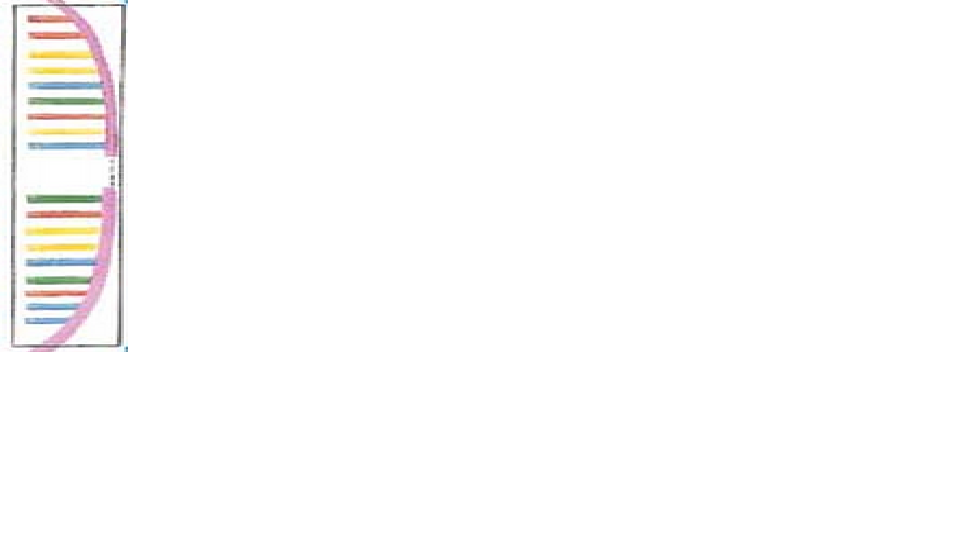
Below is a representation of some DNA. The famous “double helix” is shown on the right. The “ladder” picture on the left is more useful for current purposes.


Some DNA


The “rungs” of the ladder are called “base pairs”, mainly because they are pairs of “bases” (a.k.a. nucleotides).

Bases are chemicals and in DNA there are only 4 types. These are summarised by the first letter of each chemical: A, C, G, and T. These are represented in the diagram above in red, yellow, green, and blue, respectively. (If you see a “U” when reading about bases somewhere else then something called “RNA” is being discussed and things are probably getting more complicated than necessary for current purposes.)

Bases almost always team up with a particular complementary base. They’re kind of cute like that. A and T almost always hook up together and so do C and G. If something else happens, biologists call the process and its result an example of “mutation”. Frankly, I’m surprised they had the restraint not to call it an “abomination”.

If any section of the ladder is ripped in half lengthways and some appropriate spare material is about, it is possible to make two identical copies of the original section. Each half-rung is simply completed with its complementary base: Ts are added to As, As to Ts, Gs to Cs, and Cs to Gs. Mutation aside, this happens every time the body makes a new cell. (There are approximately 37 trillion cells in the human body, almost all of which houses its own copy of the entire body’s DNA, which itself contains 3 billion base pairs in a particular order. If that doesn’t impress you when you really think about it, you are hard to impress.)

DNA section split


The term “gene” is used rather chaotically. I will try to differentiate distinct uses of the term in the hope I don’t make the situation even worse. If I fail, please forgive me.


“Protein genes”


What I am calling “protein genes” are specific lengths of DNA half-rungs.

A “protein gene”
 

The half-rungs of a protein gene act a bit like a blueprint that is used to bring about a protein. Some sets of three adjacent bases, known as “codons” or “triplets”, provide blueprints to make specific “amino acids”. Other codons provide instructions about how to combine chains of amino acids into proteins and about how to combine proteins to make more or less everything of importance in the body (with obvious exceptions such as food and aliens). If every set of three half-rungs coded (provided a blueprint) for amino acids, a protein gene could be represented a bit like this:

 In facilitative conditions, a protein gene will result in a particular protein
The illustration above of a protein gene has a particular sequence of bases. Reading from the top down, its bases are AACCTGACT … GACCTGATT. Each protein gene ‘codes’ for a single protein but varies in how many sequenced bases it has. Human protein genes have sequences of between about 27 thousand and 2 million bases. Special triplets of bases called “stop codons” indicate that either end of a protein gene has been reached.


It takes two


Each half-rung on the DNA ladder is actually a double half-rung. (I know, but try to stay with me. This really is important.) By this I do NOT mean a base-pair of two complementary half-rungs. I mean each half-rung can be thought of as comprising two half-rungs hugging each other. If it helps, imagine gluing together two more-or-less identical ladders laid one on top of the other and then splitting the combined ‘double-thick’ ladder lengthways. Each half-rung of each double-thick half-ladder will comprise a half-rung from one of the original ladders glued side by side with the corresponding half-rung of the other ladder.

The protein gene depicted above is actually better represented by making clear that there are two parts to every half-rung, so it looks a bit like this, with each letter in the top row being connected to each corresponding letter underneath:

AACCTGACT … GACCTGATT

If this was your genetic code, one letter would correspond to the equivalent one on the half-rung you inherited from your biological mother and the other would correspond to the equivalent one on the half-rung you inherited from your biological father. For convenience, let’s pretend that all the top-row letters were inherited from your biological mother and all the corresponding bottom-row letters were inherited from your biological father. (A more accurate but difficult representation would jumble them between the top and the bottom.)


Shared genes


In the illustration I just used, all of the letters for each half-rung are identical for the bit inherited from your biological mother’s DNA and the bit inherited from your biological father’s DNA. This is mostly because your biological mother’s DNA is or was very, very, very similar to your biological father’s DNA.

When two or more living things’ DNA is very similar, those living things are often said to “share” their DNA, or have “the same” DNA. To avoid becoming disastrously confused later (when considering evolution), remember that different living things neither share nor have the same DNA as each other, although they do often have very, very similar DNA.

The most likely reason that your biological mother and your biological father each had an “A” representing their first half-rung above is because most people in the world probably have an “A” half-rung at that point in their DNA. The vast majority of people’s DNA is close to being identical to every other person’s DNA.

Estimates vary (for various reasons) but it is common to hear that well over 99% of any human’s DNA is identical to the DNA of any other human. For almost their entire genome (i.e., the whole of their DNA), all humans have the same bases in the same places.

The same is true within all species. Each living thing’s DNA is nearly identical to the DNA of every other living thing within the same species.

Similar is true across species. Compare any human, chimpanzee, bonobo, gorilla, or orang-utan with any other member of these great ape species and their DNA will be at least 93% identical. This makes sense. Lots of DNA will serve similar purposes no matter which great ape it is in, e.g., to serve as blueprints to make two legs, two arms, two eyes, etc.

Large parts of humans’ DNA are more or less identical to comparable bits of the DNA of mice and fruit flies. This makes it possible to study DNA and its effects in human-relevant ways that are much cheaper and less ethically contentious than might otherwise be the case.

“75% of our genetic make-up is the same as [that of] a pumpkin” (Link).

Statistics such as the ones above are often used to reinforce the truth that humans are animals and much more similar to non-human living things than we sometimes realise or remember.

The corollary point is of course also true: living things that have a lot of identical DNA can be enormously different to each other.

Alleles


More than 99% cent of DNA being identical across humans means that any person’s DNA differs from another person’s by considerably less than 1%.

The bit of DNA that varies across humans is referred to as “polymorphic”, meaning it can take more than one form. Reiterating a point made just above, tiny DNA differences across people can have enormous effects on their bodies and therefore often their behaviour.

When differences in DNA sequences across people affect the form or function of their protein genes, people are often said to be “genetically different” from each other.  This can be confusing. A better phrase would be to say that people in this situation have different types or alleles of the same gene (which results from differences in the specific patterning of the DNA sequencing within the gene in question).

Differences across humans in a single half-rung of DNA can have important consequences. When 1% of humans or more have been found to have importantly different half-rungs, those half-rungs are said to cause (or be) “Single Nucleotide Polymorphisms”: “SNPs” or “SNiPs”, pronounced “snips”.

Here is a representation of four people’s DNA sequence for a protein gene that has alleles (different versions) resulting from a SNP:


Illustration of an allele resulting from a SNP
Notice that the 6th base from the left differs across all 4 people, sometimes because of the bit inherited from the mum, sometimes because of the bit inherited from the dad, and sometimes both. Because this has an effect on the protein coded for, this means that each person has a different allele of that protein gene. Using the base differences to identify the alleles, these are GG, GA, AG, and AA. (Remember that, mutations aside, these pairs of letters refer to the two stuck-together bits that make a single half-rung of the thick half-ladder; one from mum and one from dad.)

SNPs and behavioural differences


Many of the physical differences between humans result from differences in bases at particular DNA locations. Some of these occur because of the effects of one or a few SNPs, e.g., eye colour. Others result from the combined effects of lots of SNPs, e.g., height. But don’t forget that the environment always plays some role and it can play an enormous role. I don’t care how many “height genes” you have; swimming with hungry sharks is likely to take you down a peg or two.

Some SNPs (or combinations of SNPs) have mediated effects on behaviour because they affect physical characteristics that affect behaviour. SNPs that make people relatively likely to be relatively tall also increase those people’s likelihood of playing basketball at certain times in their lives, especially if they also have the “male gene” and the “American gene”. (I’m joking at the end of the previous sentence, of course. You did realise that, right? I am not doing so “randomly”. I do so to make a point. SNPs that can affect one or more characteristics are not SNPs “for” any of those characteristics. SNPs that can affect height do not result in genes “for” height. Still less do they result in “basketball genes”.)

The more closely tied a behaviour is to physical differences between people, the more likely it is that differences across people engaging in that behaviour are partly the result of SNP differences across those people. People who do and don’t do yoga are likely to have identifiable differences in their DNA (and also in their age, geographic location, social status …).

But is something like this true for “altruism”, as I use the term? Are differences in genetic code across species partly responsible for cross-species differences in having and expressing concern for the positive welfare of others? Similarly, are differences in SNPs partly responsible for differences across people in the extent to which they have and express concern for the positive welfare of others? I think the answer to both questions is almost certainly “yes” but I must leave saying why for other posts.

The question I shall move towards answering here though is, “Are there any identified SNPs which affect individual differences (among humans) in concern for the positive welfare of others?” Are there any genes such that people with one allele of the gene are more likely to manifest some discernible form of concern for the positive welfare of others than are people with a different allele of that gene? Has anyone proposed a candidate for the (inappropriate) title of “The Altruistic Gene”?

“The altruistic gene”


Seekers of the altruistic gene have typically not worried too much about what altruism is or how it manifests itself. Instead, they have tended to identify individual differences in some behaviour and claim that it is a good marker of altruism, e.g., giving away some of the money an experimenter gives you after she invites you to share it with a stranger and then watches to see what you do.

When looking for “giving money away in dictator game” “altruism” genes, researchers also often look for alleles that cause individual differences in something physical that (at least sometimes) correlates with their behavioural marker of altruism. Thus, researchers look for SNPs associated with individual differences in the production or regulation of some or other alleged “altruism drug”, such as dopamine, serotonin, testosterone, or vasopressin. The most heralded potential altruism drug in recent years has probably been oxytocin.

I haven’t the time (or frankly the inclination) to look at all the research in this area. Instead, I shall discuss a single study that seems to be fairly representative of such research.


“The (allegedly-altruistic) OXTR gene”


Oxytocin is a hormone with all sorts of effects. How to best categorise those collective effects is a matter of some debate but oxytocin seems mainly to sensitise people to social cues and often accentuate or otherwise modify their responses to them.

People have oxytocin receptors (OXTRs) throughout the body, as might be expected when oxytocin levels have such divergent effects. One SNP involved in the construction or regulation of oxytocin receptors is polymorphic: it can take different forms that influence the nature of the gene that results. This means that the OXTR gene has alleles.

Because the DNA variance under discussion occurs in a single SNP, the OXTR gene’s alleles can be described using the possible base combinations in that SNP. These are AA, AG, GA, and GG.

Participants in a study by Kogan et al. (2011) watched short and silent video segments of each of 23 people whom I shall refer to as the “lovers”. In the video clips, each of the lovers was shown listening to his or her romantic partner who was talking about “an experience of personal suffering” (p. 1910). Research participants then rated how “trustworthy, compassionate, and kind” each lover was (p. 1911). Let’s keep things simple and call this a rating of how compassionate or altruistic the lovers were thought to be.

Lovers were tested for which OXTR allele they had.

Those with the GG allele received slightly higher average ratings for compassion than did those with any of the other alleles. Furthermore, of the 10 lovers with the highest compassion ratings, 6 had the GG allele. Of the 10 lovers who received the lowest compassion ratings, only 1 had the GG allele.

The experimenters had an extra couple of people watch the video segments and rate each lover’s non-verbal behaviour: how many times they nodded, extent of eye contact, openness of arm posture, and whether or not they smiled. These rating were then combined into a single “affiliative cues composite”. 

Lovers with the GG allele were judged to display more affiliative cues than those with the other alleles.

Mediation analysis suggested that lovers with the GG allele were perceived to be more compassionate than people without the GG allele because the former displayed more affiliative cues than the latter.

Thus, Kogan et al. (2011) provided evidence that some differences across people in how compassionate they are may result, in part, from “genetic differences” between people which affect their display of affiliative cues.

A critical point


One of the things I care most about as a university tutor is encouraging students to evaluate evidence and develop arguments towards a justified conclusion. One major obstacle to this occurs when people believe without question what they read in the (mainly titles, abstracts, and summaries of) scientific literature. Sometimes it feels like all I do is shatter my students’ beliefs. This can be wearing; for them and for me. Nevertheless, I would rather they adopted a Socratic acceptance of ignorance than a set of Emperor’s false beliefs. To that end, here are some things that people might like to think about if they are tempted to report findings from Kogan et al. (2011):

1.      How confident can we be that the tales of personal suffering lovers were listening to were more or less comparable, e.g., in terms of how intense the described suffering was or how distressed people were when talking about it?
2.      Is it possible that people with different OXTR alleles attract different sorts of romantic partners, who perhaps have different experiences or ways of talking about such experiences?
3.      Was perceived compassion measured on a single rating of “trustworthy, compassionate, and kind” or the average of three separate ratings of “trustworthy”, “compassionate”, and “kind”? Does it matter either way and does it matter if you can’t find out from the paper?
4.      Did this scale/these scales run from 0 – 6 or 1 – 7? (Answer given below – but not in the paper.)
5.      Did the scale/these scales indicate how compassionate the lovers were thought to be in the specific situation they were judged, in general, both, or neither? How reliable and valid a measure do you think the scale was/these scales were of whatever your previous answer suggested?
6.      Lovers with the GG allele received an average compassion rating of 4.21and lovers with the other alleles received an average compassion rating of 3.80, a difference of 0.41 on a rating scale which ran from 1 = “Not at all” to 7 = “Extremely”. Impressed?
7.      What do you make of the fact that, of the 10 lovers with the highest compassion ratings, 4 did not have the GG allele and of the 10 lovers who received the lowest compassion ratings, one did have the GG allele?
8.      Assuming that the study’s results were persuasive in all respects, would they persuade you that people with the GG allele are relatively likely to be highly compassionate, that people without the GG allele are relatively likely to be without compassion, both, or neither? If you think the first two options are identical, think again.
9.      Do different OXTR alleles lead to differences in compassion, differences in how compassion is expressed, or differences in affiliative behaviour?
10.  Allele effects were examined among a sample of (only) 23 lovers. How reliable and generalizable does that seem to make the study’s main findings? Hint: See here
11.  How many lovers had each allele? When you’ve answered this question, maybe revisit the previous one.
12.  Were differences in scores on the “affiliative cues composite” mirrored by differences on each component of that composite? Why might it matter?
13.  If differences in oxytocin levels affect differences in a particular behaviour on a particular occasion, does this mean that oxytocin differences (a) always result in comparable behaviour differences or (b) are always involved when there are differences in the behaviour? (Hint: Adding a little salt can change the way something tastes.)
14.  Hopefully you will by now be asking yourself all manner of additional pertinent questions.
15.  When I emailed Kogan with questions similar to some of those above (and told him that I was doing so in preparation for this post), he graciously replied and admitted, “In reality, I'd say the [OXTR] gene is associated with slightly less prosociality among A carriers who are caucasian--it gets a lot dicier when you look at other ethnicities. But the effect is almost certainly small (we got lucky in our paper that it was as big as it was!).”

I’m not picking on this paper, particularly. Most of the papers I look at in detail when they claim a link between some or other “gene” and “altruism” are often even less compelling. As I said before, this can be wearing for all involved. Sorry.


Conclusion


The phenomenon I am interested in is a sprawling shape-shifter. People can have and express concern for the positive welfare of others in a multitude of ways and accordingly it can be difficult to identify reliable and valid indicators of even specific instances of such concern. Lots of characteristics influence whether and how a person will engage in even a particular instance of altruism.

Being compassionate when listening to a loved one report a distressing incident is not a single, simple, or uniform activity. It involves attending to the other; trying to understand what they are saying; trying to understand how they felt during the recollected incident; trying to understand how they feel right now; perhaps trying to work out how they might feel in the near and more distant future, perhaps as a result of things that you consider doing; wondering what you can do that would be in their best interest and not make things worse for them; managing one’s own thoughts and feelings in service of the other’s welfare; etc. How such compassion is expressed and how it can be most effective depends on one’s own abilities and preferences; what the other person likes and responds well or badly to; the specific setting (e.g., who else is around and what role they seem likely to play); etc.

I therefore do not expect simple relationships between any SNP and any single manifestation of altruism; still less any and all instances of altruism. This is not because small DNA differences can’t have huge physical and behavioural consequences. I think they can. It is because I think that altruism is too complex a phenomenon to be well predicted by a single simple indicator, whether that is an SNP or levels of some biochemical such as oxytocin.

Any search for “the altruism gene” seems to be to be highly suspect and any claim to have found it considerably more so. Whenever I have looked in detail at the evidence for such a claim, I have always found it to be seriously wanting. Given what I have already said, it would be astonishing if it were otherwise. From my point of view, studies in this area cause confusion more than they further knowledge. They give people the illusion of evidence for their false intuitions and they require a lot of time and energy to try to counter (or even to ignore).


Maybe time and good science will prove me wrong. Until then, I advise extreme caution (to the point of quite radical scepticism) in response to any claim to have identified “a” let alone “the” altruistic gene.


Prelude to later posts


As I predicted, I have run out of time long before I have run out of things to say. For now, I recommend that any of my students thinking about writing an essay using material from this week should seriously think about the following:

·        Many “genetic relatedness” studies show links between (unspecified) “genes” and individual differences in “altruism” within the sample studied. Don’t mix up potential causes of a specific instance of individual differences in altruism with reasons for group (including temporal) differences in altruism; and still less with causes of altruism. Do consider how much “non-genetic” variation there was within any given sample and how well that represents “non-genetic” variation beyond it. (If there is limited environmental variance and individuals’ differing life-experiences are not measured, of course differences in “genes” are going to explain the lion’s share of whatever differences there are in the criterion variable.) Do think carefully about the indicator of altruism and its relation to concern for the positive welfare of others.

·         Most discussions about “biological altruism”, “evolutionary altruism”, “reproductive altruism”, and the like are about a completely different phenomenon to the one studied on this module. Roughly speaking, that phenomenon concerns a living thing having a characteristic which, over the lifespan, has the consequence of being ‘costly’ specifically in the sense of curtailing how many copies of its own “genes” exist in subsequent generations. (“Genes” is in quotes because the term is used in a different way than described above for “protein genes”.) Such a hypothetical phenomenon could, if it existed, seem to cause a problem for Darwin’s theory of (individual level) natural selection. Evolutionary arguments that claim to solve “the problem of altruism” do so by explaining (away) that sort of so-called altruism (which would be better termed something like “DNA-reproduction curtailing”). Because they use such a stupid term for the phenomenon they are most interested in, the evolutionarily-inclined often get themselves and others into terrible and massively costly (in real terms) messes. Discussions about such things as “group selection”, “kin selection”, “reciprocal altruism” and the like are largely arguments about how natural selection works. Those theories were not intended to say anything about altruism as normal people understand the term: (‘psychological’) aggression is at least as likely a candidate as (‘psychological’) altruism for being DNA-reproduction curtailing. If you want to use such theories in that way (although I think you would need a good justification for doing so), you must address various issues.
o   What specific characteristic are you talking about? Describe it as objectively as possible, ideally without importing any “motive-inviting” terminology. “Makes a distinct sound when a predator approaches and in the presence of relatives” is much less likely to lead to confusion than is the phrase “Gives an alarm call” (“gives” and “alarm” both inviting confusion). If you must use something like the latter, define it well first (paying particular attention to the contexts in which the characteristic manifests) and put at least the first use of the phrase in scare quotes.
o   What evidence is there that individual differences in this characteristic are influenced by individual differences in DNA? If there is none, you are making an assumption and you need to provide justification for doing so. A belief that “they must be” because “everything is genetic” is not enough. Unless individual differences in the characteristic you are considering are influenced by individual differences in DNA, you are looking in the wrong place for a good explanatory theory for the former.
o   What evidence is there that individual differences in the characteristic can be DNA-reproduction curtailing over the life-course (seeing here, for example, and allowing for possibilities suggested by reciprocal altruism, kin selection, group selection, etc.)? If you just tell a story about how the characteristic ‘must be’ costly for DNA-reproduction, I bet I can usually come up with an equally plausible story for why it might not be. I will want reasons for thinking your Just-So story is better than mine. (For introductions into Just-So stories in evolutionary theory, you could do a lot worse than looking here or here.)

·         Evolutionarily-speaking, “altruistic punishment” is, if anything, a more misleading term than “biological altruism”. It is necessarily “altruistic” only in the “apparently curtails DNA reproduction” way, just as “evolutionary spite” would - were it to exist. (Relevant research often muddies the water by examining situations in which people pay economic costs apparently to punish violation of norms that, if followed, would benefit others in some way. The mish-mash of different types of costs and benefits – let alone inferred motives - in such paradigms almost guarantees confusion.) Again, such phenomena and possibilities may (but I would guess probably don’t) cause problems for one or other theory of natural selection. They have nothing obvious to say about people’s concern for the welfare of others.


Picture credits

All gene diagrams [Link]
Bullshit poster [Link]
Jean Genie [Link]

How to cite this blog post using APA Style

T. Farsides. (2014, October 26). The genetics of altruism. Retrieved from http://tomfarsides.blogspot.com/2014/10/the-genetics-of-altruism.html